What Are CRB Panel Traps?
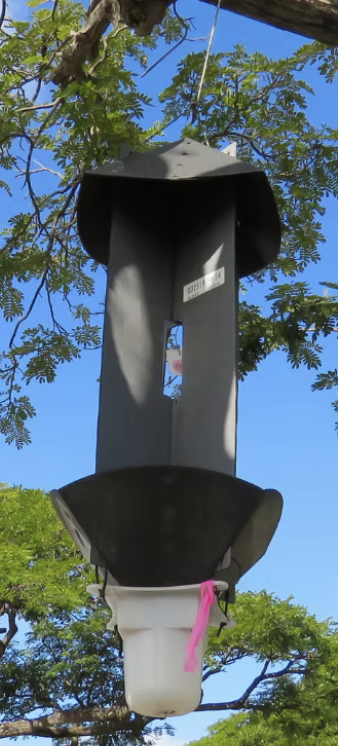
Panel traps are simple, passive devices that use scent to attract Coconut Rhinoceros Beetles and a physical barrier to capture them. Each trap consists of two black cross-shaped panels with a lure suspended near the top and a collection cup hanging below.
How They Work
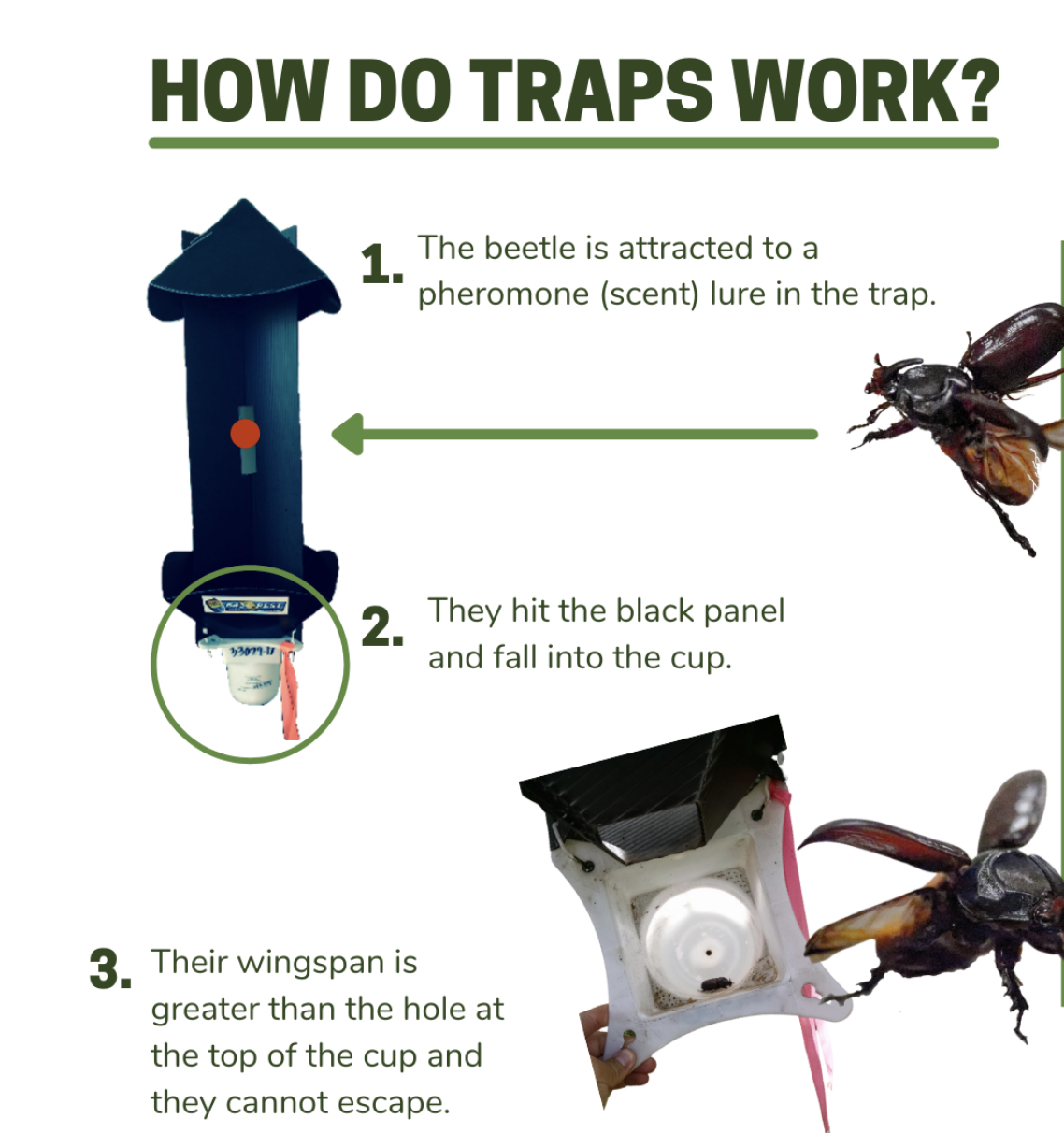
The traps use an aggregate pheromone, an artificial smell that lures the beetles towards it. Since CRB are night-active, it's difficult for them to see the black panels in the dark. As they fly towards the lure, they hit the panels and fall into the cup at the bottom. The hole at the top of the cup is roughly two inches — much smaller than the CRB's four-plus-inch wingspan — so once they fall in, they cannot fly back out.
Our Goal: 100 Traps in Lanikai
Save Lanikai's goal is to distribute 100 traps throughout Lanikai. The more coverage we have, the better picture we get of where CRB are concentrated. If you are a Lanikai resident and would like a trap to hang at your property, please contact us and we will get one to you.
Traps Are a Monitoring Tool, Not a Primary Control
It's important to understand that panel traps are not our primary method of controlling CRB. The primary methods are protecting the crowns of trees and managing green waste, as discussed on those pages. Traps alone cannot keep up with CRB reproduction.
What traps do is give us a monitoring network. By counting the beetles caught in each trap and noting where, we can identify CRB hotspots in Lanikai and direct our protection and green-waste efforts to where they are needed most.
That said, traps do remove breeding adults from the population, which is a real benefit. Each female CRB lays roughly 90–100 eggs in her lifetime (typical averages run around 90–100 eggs per female, per published research on Oryctes rhinoceros; see CRBhawaii.org for more on CRB biology), so every captured female is potentially 100+ beetles that never get born.